Mitochondrial Health: At the core of every metabolic process lies the mitochondrion, the cellular powerhouse responsible for converting nutrients into adenosine triphosphate (ATP). While traditional weight loss models focus heavily on caloric deficits, emerging research suggests that mitochondrial Health efficiency—specifically the ability of these organelles to oxidize substrates effectively—is the true determinant of metabolic flexibility. When mitochondrial function is compromised through oxidative stress or poor nutrient signaling, the body’s ability to access stored adipose tissue for fuel is significantly impaired, leading to the systemic ‘metabolic gridlock’ often associated with weight loss plateaus.
1.The Bioenergetics of Fat Oxidation:
Mitochondrial density in skeletal muscle is the primary predictor of an individual’s maximal oxygen consumption (VO2 max) and fat-burning capacity. Within the mitochondrial matrix, fatty acids undergo beta-oxidation to produce Acetyl-CoA, which then enters the Krebs cycle. When mitochondria are healthy and abundant, this process is seamless; however, ‘clogged’ or dysfunctional mitochondria lead to incomplete combustion of lipids, resulting in the accumulation of toxic fatty acid metabolites that further drive insulin resistance.
2.Mitochondrial “Fusion vs. Fission”: The Cellular Balance:
Mitochondrial Health: The dynamics of mitochondrial morphology—specifically the balance between fusion (joining) and fission (splitting)—dictate how effectively a cell manages energy demands. Healthy cells favor mitochondrial fusion to optimize ATP production and dilute the effects of damaged DNA. Chronic overnutrition and a sedentary lifestyle, however, push the system toward excessive fission, creating fragmented, inefficient mitochondria that struggle to burn fat and instead produce high levels of oxidative stress (ROS).
3.Hormetic Triggers for Mitophagy:
To upgrade your metabolism, you must clear out the ‘cellular junk’ through a process called mitophagy—the selective degradation of defective mitochondria. This is triggered by hormetic stressors, such as intermittent fasting and high-intensity interval training (HIIT). These stressors activate the AMPK pathway, signaling the body to dismantle weak mitochondria and replace them with new, robust ones that are significantly more efficient at metabolizing substrates for energy.
4.Mitochondrial Health: Essential Cofactors for Optimization
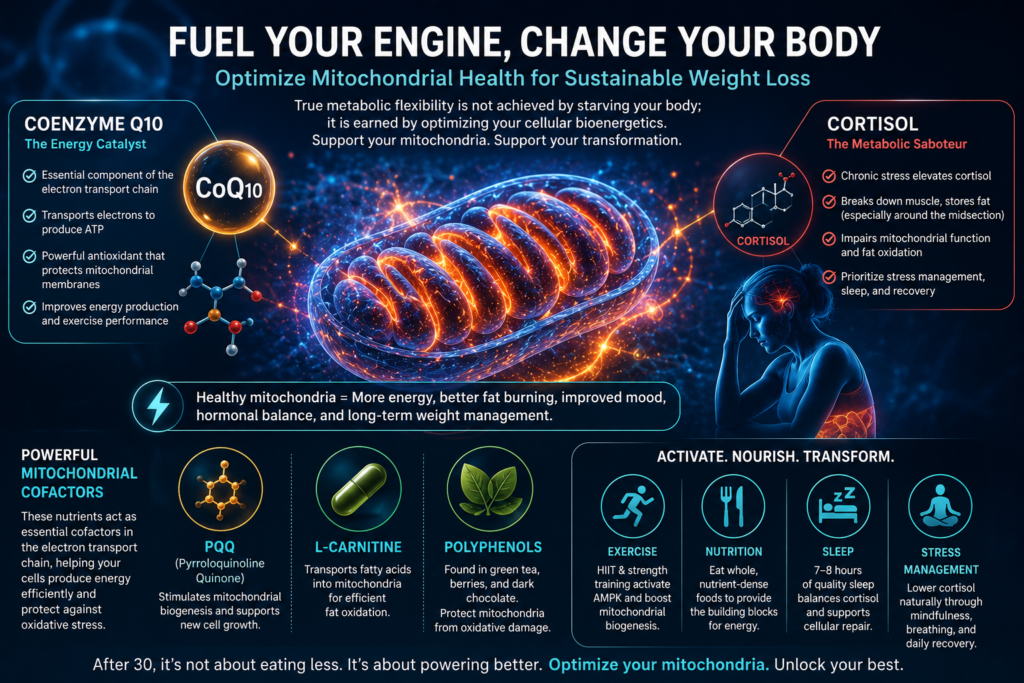
Biohacking mitochondrial health requires specific micronutrients that act as essential cofactors in the electron transport chain. Coenzyme Q10 (CoQ10), PQQ (Pyrroloquinoline quinone), and L-Carnitine play vital roles in transporting fatty acids and shuttling electrons to produce ATP. Supplementing with these nutrients, combined with a diet rich in polyphenols, provides the raw materials necessary to protect the mitochondrial membrane from lipid peroxidation and maintain a high basal metabolic rate.
Conclusion:
Shifting the Paradigm After 30
True metabolic flexibility is not achieved by starving your body; it is earned by optimizing your cellular bioenergetics. After the age of 30, natural mitochondrial decline can make traditional dieting feel like an uphill battle. However, by shifting your focusing on mitochondrial health and rejuvenation—through specific hormetic triggers and micronutrient cofactors—you unlock the key to sustainable fat loss. When your cellular powerhouses run efficiently, maintaining a lean, vibrant body ceases to be a struggle and becomes a natural byproduct of cellular health.
🧬 Support Healthy Cellular Energy
Healthy aging starts at the cellular level. Alongside proper nutrition, exercise, sleep, and stress management, some individuals choose targeted mitochondrial support to help maintain energy production and cellular vitality.
👉 Learn More About Advanced Mitochondrial Formula
Medical Disclaimer & Affiliate Disclosure: This post contains affiliate links. If you choose to purchase any commercial biomarker testing kits, supplements, or products through these links, we may receive a small commission at no additional cost to you. We only recommend products aligned with our scientific reviews. The information on slimafter30s.com is for educational, scientific, and informational purposes only and does not substitute for professional medical advice, diagnosis, or treatment. Always consult with a qualified healthcare professional before making significant lifestyle changes, interpreting biomarkers, or beginning new nutritional protocols. Reliance on any information provided by Slim After 30s is solely at your own risk.
Pingback: Protein distribution metabolism after 30
Pingback: Insulin and fat metabolism after 30
Pingback: Optimize T3 and T4 weight loss after 30
Pingback: Cold Plunges and Metabolism: Thermal Stress
Pingback: Autophagy weight loss after 30
Pingback: Why Belly Fat Increases After 30. Cortisol and Abdominal Fat After 30