Many people believe that weight loss is a simple equation of “eat less, move more.” However, modern metabolic science reveals that your metabolic health is the real engine behind sustainable fat loss. If you feel like your progress has stalled after hitting 30, it’s likely not a lack of willpower—it’s about how your body manages energy.
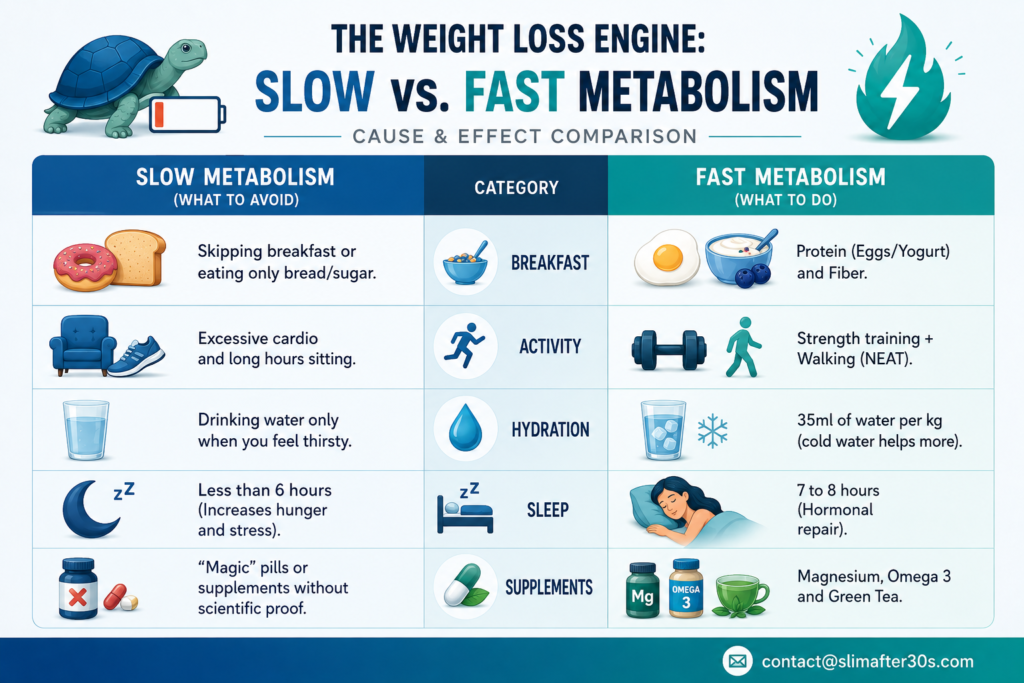
1. Prioritize Protein: The Thermic Effect of Food (TEF):
Unlike fats or carbs, protein requires significantly more energy to digest. Studies show that increasing protein intake to 25–30% of your daily calories can boost your metabolism by up to 100 calories per day.
- Pro Tip: Swap your morning bagel for eggs or a high-quality whey protein shake to jumpstart your fat-burning furnace early.
2. Strength Training: Building “Active” Tissue:
Muscle is metabolically expensive. Even at rest, a body with more lean muscle mass burns more calories than one with a higher body fat percentage. Incorporating resistance training creates an “afterburn effect” known as EPOC (Excess Post-exercise Oxygen Consumption), keeping your metabolic rate elevated for hours after leaving the gym.
3. Sleep Hygiene and Cortisol Management:
In the US, sleep deprivation is a silent metabolism killer. Lack of rest spikes cortisol, the stress hormone that signals your body to store visceral fat (belly fat). Aiming for 7–9 hours of quality sleep is just as critical as your diet plan.
4. Strategic Hydration & Thermogenesis:
Drinking cold water can temporarily increase your metabolic rate because your body spends energy to heat the liquid to core temperature. Proper hydration is also the “oil” for the chemical process of lipolysis (breaking down fats).
Conclusion:
Sustainable weight loss in 2026 is about working with your biology, not against it. By focusing on protein, muscle preservation, and hormonal balance, you transform your metabolism into an efficient, fat-burning machine.