Maintaining lean muscle mass is the single most critical defense against the metabolic decline typically associated with biological aging. However, skeletal muscle protein synthesis (MPS) is not a constant, passive process; it operates on a strict threshold mechanism that requires a specific concentration of essential amino acids to be activated. While traditional dieting focuses purely on daily caloric counts, modern metabolic science reveals that when and how you distribute your protein intake throughout the day determines whether your body burns fat or sacrifices its metabolic engine. It’s what we call Protein Distribution for Fat Loss
1. Leucine Threshold and mTOR1 Activation:
To successfully trigger Muscle Protein Synthesis (MPS), your body must reach what clinicians call the “leucine threshold.” Leucine is an essential amino acid that acts as a chemical key to turn on the mammalian target of rapamycin complex 1 (mTORC1)—the primary cellular pathway responsible for muscle growth and repair. For adults over 30, this threshold requires roughly 2.5 to 3 grams of leucine per meal, which equates to roughly 30 to 40 grams of high-quality protein. Spacing your protein intake evenly throughout the day ensures that this anabolic switch is activated multiple times, maximizing muscle preservation, which equates to efficiency in Protein Distribution for Fat Loss.
2. Avoiding Sarcopenic Obesity and Metabolic Slowdown:
When individuals restrict calories to lose weight without managing protein distribution, up to 25% of the weight lost can come from active skeletal muscle tissue. This loss leads to a condition known as sarcopenic obesity, where body weight decreases but body fat percentage remains high, permanently lowering your Basal Metabolic Rate (BMR). By strategically feeding your muscles with timed protein portions, you signal to your biology that amino acids are abundant, protecting lean tissue and forcing your metabolism to draw energy exclusively from stored adipose tissue.
3. Maximizing the Thermic Effect of Food (TEF):
Not all macronutrients are processed equally by the human digestive system. See how Protein Distribution for Fat Loss is an essential and necessary factor for those who have already reached 30 years of age. Protein possesses the highest Thermic Effect of Food (TEF) among all substrates, requiring 20% to 30% of its own caloric value just to be broken down, absorbed, and assimilated by the body. This means that a significant portion of the calories from your protein intake is immediately dissipated as heat. Back-loading your daily protein into a single massive dinner is metabolically inefficient; distributing it across three to four meals creates a sustained thermic effect that burns extra calories around the clock.
4. Nighttime Casein and Nocturnal Muscle Recovery:
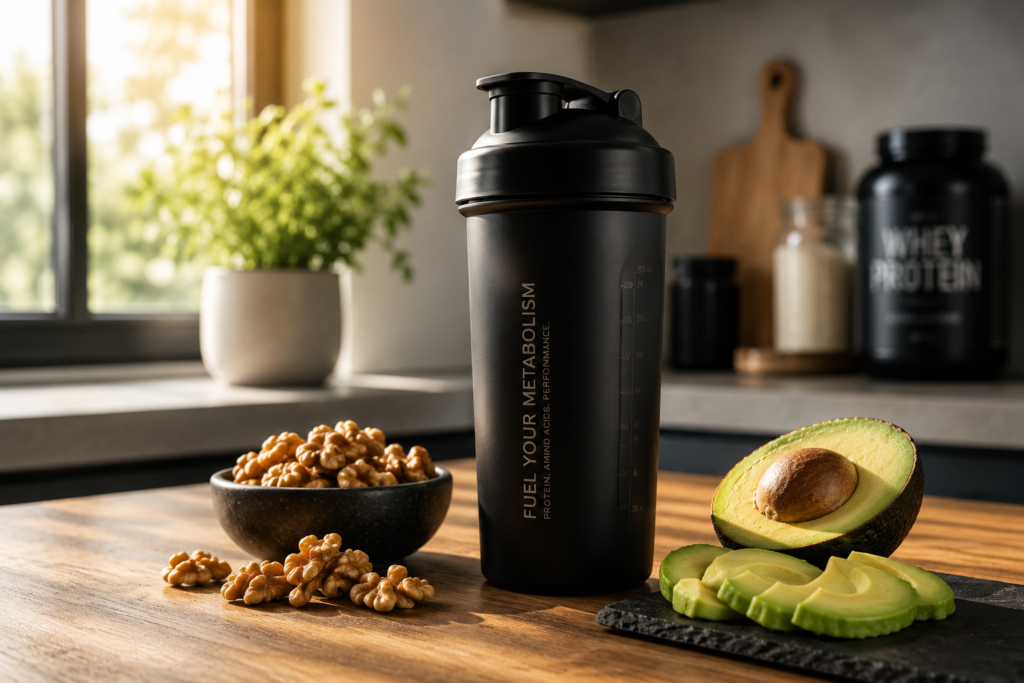
The longest period your body goes without nutrient intake occurs during sleep, a window where the body naturally enters a catabolic (muscle-breaking) state to supply the liver with baseline amino acids. To mitigate this nocturnal muscle loss, consuming a slow-digesting protein substrate like micellar casein or a dense protein snack 30 minutes before sleep is a powerful metabolic hack. Casein clots in the stomach, creating a steady, time-released delivery of amino acids throughout the night, supporting recovery and maintaining an active metabolic rate while you rest.
Conclusion:
Achieving a high-performance, lean physique after 30 requires moving beyond basic caloric restriction. By understanding the leucine threshold, distribution kinetics, and the thermic power of protein timing, you take control of your hormonal signaling. Muscle preservation is the ultimate long-term strategy for metabolic health and fat loss longevity.
Medical Disclaimer: The information on this website is for educational and informational purposes only and is not intended as medical advice. The content regarding metabolic health, biohacking, and nutrition is based on current research but should not be used to diagnose, treat, or prevent any health condition. Always consult with a qualified healthcare professional or physician before starting any new diet, supplement, or exercise protocol. Reliance on any information provided by slimafter30s.com is solely at your own risk