What most individuals interpret as a lack of willpower is often a sophisticated biochemical signaling problem originating deep within the gut microbiome. Gut Brain Axis Weight Loss After 30 = Modern neuro-gastroenterology has revealed that cravings are not simply emotional impulses generated by the conscious brain; they are neurochemical survival messages influenced by trillions of microorganisms living inside the digestive tract.
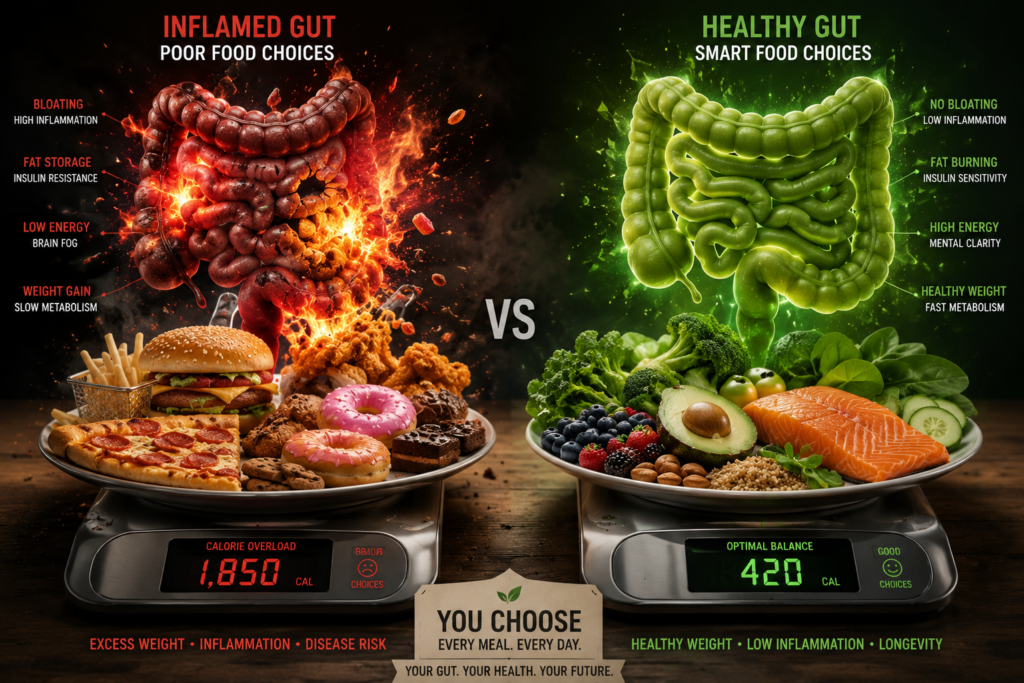
After the age of 30, chronic stress exposure, ultra-processed foods, sleep disruption, medications, and metabolic inflammation begin reshaping the microbial ecosystem inside the gastrointestinal tract. As beneficial bacterial diversity declines, opportunistic strains capable of thriving on refined sugars and inflammatory substrates become increasingly dominant. This microbial imbalance fundamentally alters the communication network between the gut and the brain, hijacking appetite regulation, increasing reward-seeking behavior, and intensifying cravings for hyper-palatable foods that directly impair metabolic flexibility.
To achieve sustainable fat loss after 30, the solution is not stronger discipline—it is rebuilding the biological communication system governing hunger itself. By optimizing the gut-brain axis, restoring microbial diversity, and repairing inflammatory signaling pathways, you can transform your internal chemistry from one of compulsive cravings into one of natural satiety and metabolic control.
1. The Vagus Nerve: The Neurochemical Highway of Cravings:
The gut and brain exist in constant bidirectional communication through the vagus nerve—a massive neurochemical superhighway connecting the gastrointestinal tract directly to the central nervous system.
Emerging research demonstrates that specific microbial strains can synthesize neurotransmitter-like compounds and inflammatory metabolites capable of influencing mood, appetite behavior, and reward perception. In dysbiotic microbiomes, pathogenic bacteria manipulate this signaling network to increase cravings for the very substrates required for their own survival—primarily refined sugars and rapidly absorbable carbohydrates.
This phenomenon is not merely psychological; it is biochemical coercion.
Microbial metabolites traveling through vagal pathways can amplify dopaminergic reward signaling inside the brain, reinforcing compulsive eating behaviors and increasing dependency on highly processed foods. Over time, this creates a destructive metabolic loop characterized by:
- unstable blood sugar;
- chronic hunger;
- elevated insulin secretion;
- and impaired fat oxidation.
Restoring microbial balance through targeted nutritional interventions gradually silences these maladaptive neurochemical signals, reducing cravings at their biological source rather than relying exclusively on behavioral restraint.
2. Short-Chain Fatty Acids:The Molecular Language of Satiety:
One of the most important metabolic functions of beneficial gut bacteria is the fermentation of prebiotic fibers into Short-Chain Fatty Acids (SCFAs), particularly:
- acetate;
- propionate;
- and butyrate.
These SCFAs act as highly active signaling molecules capable of regulating appetite, inflammation, glucose metabolism, and hormonal satiety pathways. When fermentable fibers reach the colon intact, specialized bacterial strains metabolize these substrates and release SCFAs that bind directly to Free Fatty Acid Receptors (FFAR2 and FFAR3) located on enteroendocrine L-cells within the intestinal lining.
This interaction stimulates the secretion of:
- Glucagon-Like Peptide-1 (GLP-1);
- Peptide YY (PYY);
- and additional satiety hormones responsible for signaling fullness to the hypothalamus.
In practical terms, a healthy microbiome literally manufactures biochemical satiety. As SCFA production increases, gastric emptying slows, blood sugar becomes more stable, and cravings progressively diminish. This explains why individuals consuming fiber-rich, microbiome-supportive diets often experience effortless appetite regulation without relying on aggressive caloric restriction.

3. Metabolic Endotoxemia: How Gut Inflammation Blocks Fat Burning:
One of the most dangerous consequences of microbial imbalance is increased intestinal permeability, commonly referred to as “leaky gut.” Under inflammatory conditions, the intestinal barrier becomes compromised, allowing toxic bacterial fragments known as Lipopolysaccharides (LPS) to leak into systemic circulation.
This phenomenon, known clinically as metabolic endotoxemia, triggers chronic low-grade inflammation throughout the body. Once circulating in the bloodstream, LPS molecules activate inflammatory cytokine cascades that interfere directly with hypothalamic signaling pathways responsible for energy regulation. One of the primary victims of this inflammatory disruption is leptin—the master hormone that informs the brain sufficient energy has been stored.
As leptin signaling becomes impaired, the hypothalamus enters a perceived state of starvation despite excess caloric availability. The result is a catastrophic metabolic mismatch characterized by:
- persistent hunger;
- reduced energy expenditure;
- elevated fat storage;
- and resistance to lipolysis.
This is one reason why many individuals struggle to lose weight despite maintaining caloric restriction: the inflammatory gut-brain connection is continuously overriding normal satiety physiology.Repairing intestinal barrier integrity through microbial restoration and anti-inflammatory nutrition is often one of the most overlooked strategies for restoring metabolic flexibility after 30
4. Microbial Diversity: Engineering a Lean Metabolic Ecosystem:
The goal of metabolic biohacking is not merely eliminating harmful bacteria—it is cultivating ecological diversity inside the gut microbiome.
Gut brain axis weight loss after 30. Clinical data consistently demonstrates that lean, metabolically healthy individuals possess significantly greater microbial richness and diversity compared to individuals suffering from obesity and insulin resistance. Among the most promising bacterial strains associated with metabolic health is Akkermansia muciniphila, a mucin-degrading microorganism strongly linked to:
- improved insulin sensitivity;
- reduced inflammation;
- enhanced gut barrier integrity;
- and lower visceral fat accumulation.
Supporting these beneficial strains requires a highly diverse nutritional environment rich in:
- polyphenol-containing plants;
- resistant starches;
- fermented substrates;
- and microbiome-accessible carbohydrates.
This nutritional architecture creates what researchers increasingly describe as a resilient microbial ecosystem—one capable of regulating appetite, stabilizing glycemic responses, and optimizing energy extraction from food.
True metabolic freedom occurs when your microbiome begins working in alignment with your physiology rather than against it.

Conclusion:
Long-term fat loss after 30 is not achieved through endless restriction or constant dietary punishment—it is achieved through biological communication mastery.
Your microbiome functions as a virtual endocrine organ that continuously influences:
- hunger signaling;
- inflammatory status;
- glucose metabolism;
- neurotransmitter production;
- and fat storage behavior.
Gut brain axis weight loss after 30. When the gut-brain axis becomes dysregulated, cravings intensify, satiety weakens, and metabolic efficiency collapses. However, by rebuilding microbial diversity, enhancing SCFA production, repairing intestinal integrity, and restoring vagal communication, you can fundamentally reprogram your metabolic biology. Sustainable weight loss begins the moment your internal chemistry starts supporting your goals instead of sabotaging them.
Medical Disclaimer: The information on this website is for educational and informational purposes only and is not intended as medical advice. The content regarding the gut microbiome, neuro-gastroenterology, vagus nerve signaling, short-chain fatty acids, intestinal permeability, and metabolic health is based on current scientific research but should not be used to diagnose, treat, or prevent any health condition. Always consult with a qualified healthcare professional or physician before altering your diet, beginning supplementation, or implementing new metabolic protocols. Reliance on any information provided by slimafter30s.com is solely at your own risk.
Pingback: Protein distribution metabolism after 30
Pingback: Optimize T3 and T4 weight loss after 30
Pingback: Metabolic Flexibility After 30: Why Your Body Stops Burning Fat Efficiently
Pingback: Nutrient Timing: The Science of Protein Distribution for Fat Loss for Muscle Preservation - slimafter30s.com
Pingback: Inflammation slows metabolism after 30
Pingback: Insulin and fat metabolism after 30