After the age of 30, many adults begin to notice subtle changes in their bodies. Recovery from exercise takes longer, maintaining muscle mass becomes more challenging, and weight management often requires greater effort than it did in their twenties.
Most people assume these changes occur simply because they are getting older. However, emerging research reveals a more specific biological phenomenon: anabolic resistance.
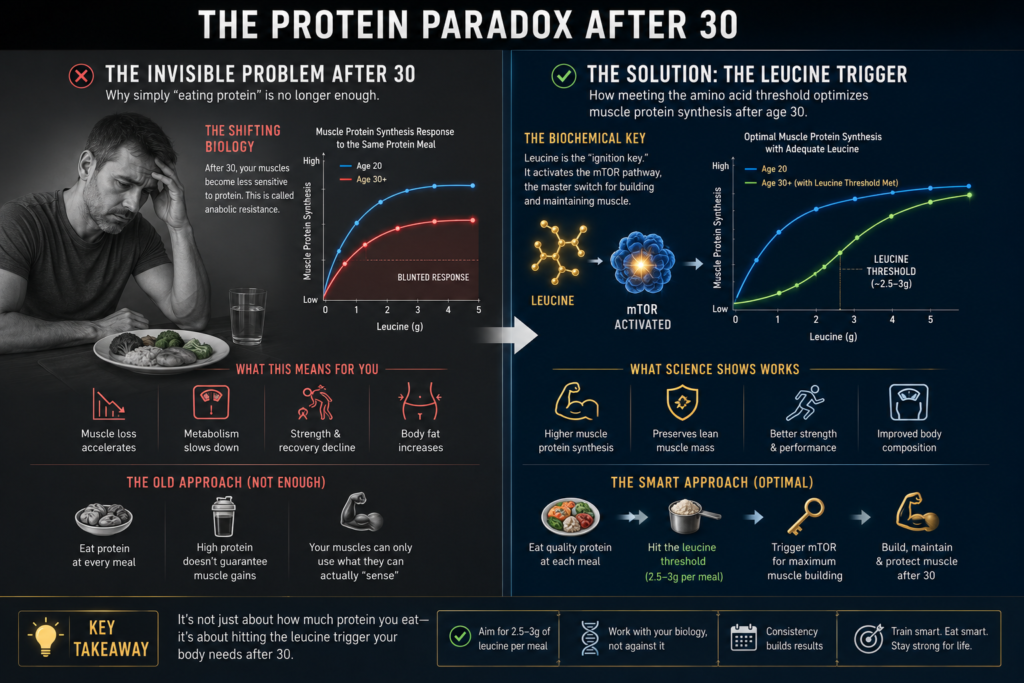
As we age, our muscles become less responsive to dietary protein. In other words, simply consuming protein is no longer enough. The body requires a stronger signal to activate muscle protein synthesis—the process responsible for repairing, maintaining, and building muscle tissue.
This signal is known as the Leucine Trigger.
Understanding how the leucine trigger works may be one of the most powerful strategies for preserving muscle mass, supporting metabolic health, and promoting healthy aging after 30.
1.Why Muscle Loss Begins Earlier Than Most People Realize:
Most adults associate age-related muscle loss with their 60s or 70s. In reality, the process often begins decades earlier.
Research suggests that adults can begin losing muscle mass gradually after the age of 30, especially if physical activity levels decline or protein intake becomes inadequate.
This gradual decline contributes to:
- Reduced metabolic rate
- Lower insulin sensitivity
- Decreased physical performance
- Reduced mitochondrial efficiency
- Increased risk of weight regain
Because skeletal muscle is one of the body’s most metabolically active tissues, preserving muscle mass is essential not only for strength but also for long-term metabolic health.
The challenge is that aging muscles become less sensitive to the anabolic signals that once stimulated growth and repair.
This phenomenon is called anabolic resistance.
2.The Leucine Trigger: The Biological Switch for Muscle Protein Synthesis:
Leucine is one of the three branched-chain amino acids (BCAAs) and is widely recognized as the most anabolic amino acid in human nutrition.
Unlike other amino acids that primarily serve as building blocks, leucine functions as a metabolic messenger.
When sufficient leucine enters the bloodstream, it activates a cellular pathway known as mTOR (mechanistic Target of Rapamycin).
mTOR acts as a biological switch that tells muscle cells:
“Resources are available. Begin repair and growth.”
When leucine intake reaches a specific threshold, muscle protein synthesis increases significantly.
3.Anabolic Resistance After 30: Why More Protein Isn’t Always Better:
One of the biggest misconceptions in nutrition is that consuming more protein automatically leads to better muscle preservation.
The reality is more nuanced.
As anabolic resistance develops, muscle tissue becomes less responsive to amino acids.
This means that a small protein snack containing only a few grams of protein may not provide enough leucine to activate mTOR effectively.
Instead, adults over 30 often benefit from consuming protein-rich meals that reach the leucine threshold required to stimulate muscle protein synthesis.
This helps explain why:
- Protein distribution matters
- Meal quality matters
- Amino acid composition matters
A meal that contains 30 grams of high-quality protein may produce a stronger anabolic response than several smaller meals spread throughout the day.
The goal is not simply to consume protein.
The goal is to activate the leucine trigger consistently.
4.The Science Behind mTOR, Muscle Preservation, and Healthy Aging:
The mTOR pathway is one of the most extensively studied longevity-related signaling systems in biology.
When activated appropriately, mTOR supports:
- Muscle repair
- Protein synthesis
- Cellular growth
- Physical performance
- Recovery from exercise
In healthy aging, maintaining periodic activation of muscle protein synthesis becomes increasingly important.
Muscle tissue serves as a reservoir for amino acids, supports glucose regulation, and contributes significantly to resting energy expenditure.
When muscle mass declines:
- Metabolism slows
- Blood sugar regulation worsens
- Physical resilience decreases
- Frailty risk increases
Conversely, preserving muscle mass supports metabolic flexibility and healthy aging.
The leucine trigger acts as one of the key nutritional signals that helps maintain this balance.
5.Best Food Sources of Leucine for Adults Over 30:
Not all protein sources contain the same amount of leucine.
The following foods are among the richest dietary sources:
| Food | Approximate Leucine Content |
| Whey Protein | Very High |
| Chicken Breast | High |
| Lean Beef | High |
| Salmon | Moderate to High |
| Eggs | Moderate |
| Greek Yogurt | Moderate |
| Cottage Cheese | Moderate |
| Parmesan Cheese | Moderate |
Whey protein is particularly notable because it contains one of the highest leucine concentrations available in whole-food nutrition. This is one reason why whey protein remains popular among researchers studying muscle preservation and healthy aging.
6.How to Reach the Leucine Trigger at Every Meal:
Achieving the leucine trigger does not require extreme diets.
Instead, it involves creating meals that contain sufficient high-quality protein.
Breakfast
- Greek yogurt
- Eggs
- Whey protein shake
Lunch
- Grilled chicken breast
- Vegetables
- Quinoa
Dinner
- Salmon
- Sweet potatoes
- Mixed vegetables
These meals provide the amino acid profile necessary to support muscle protein synthesis while also supporting overall metabolic health.
The goal is consistency rather than perfection.
7.The Connection Between Leucine, Fat Loss, and Metabolic Health
Many people focus exclusively on weight loss while overlooking muscle preservation.
This can be a costly mistake.
During calorie restriction, muscle loss often accompanies fat loss.
When muscle tissue decreases:
- Resting metabolic rate declines
- Energy expenditure decreases
- Long-term weight maintenance becomes more difficult
Preserving muscle helps protect metabolic rate during weight loss.
Research also suggests that maintaining healthy muscle mass supports:
- Improved insulin sensitivity
- Better glucose regulation
- Enhanced physical function
- Improved metabolic flexibility
The leucine trigger therefore plays a role not only in muscle health but also in long-term body composition management.
8.Practical Takeaways:
If you are over 30 and want to preserve muscle mass, improve metabolic health, and support healthy aging, focus on these principles:
- Prioritize high-quality protein sources.
- Distribute protein strategically throughout the day.
- Include leucine-rich foods in major meals.
- Engage in resistance training regularly.
- Support recovery through adequate sleep and nutrition.
The combination of resistance training and proper leucine intake creates one of the most powerful environments for preserving muscle and metabolic function.
🧬 Support Healthy Cellular Energy
Healthy aging starts at the cellular level. Alongside proper nutrition, exercise, sleep, and stress management, some individuals choose targeted mitochondrial support to help maintain energy production and cellular vitality.
👉 Learn More About Advanced Mitochondrial Formula
Conclusão:
After age 30, preserving muscle is no longer optional—it becomes one of the most important investments you can make in your future health.
The science behind the leucine trigger demonstrates that muscle protein synthesis depends on more than simply consuming protein. It requires reaching the amino acid threshold capable of activating the cellular pathways responsible for repair, growth, and resilience.
By understanding anabolic resistance and strategically incorporating leucine-rich foods into your diet, you can support muscle preservation, maintain metabolic health, and enhance your long-term longevity.
Small nutritional decisions made today may determine how strong, energetic, and metabolically healthy you remain in the decades ahead.
Medical Disclaimer & Affiliate Disclosure: This post contains affiliate links. If you choose to purchase any commercial biomarker testing kits, supplements, or products through these links, we may receive a small commission at no additional cost to you. We only recommend products aligned with our scientific reviews. The information on slimafter30s.com is for educational, scientific, and informational purposes only and does not substitute for professional medical advice, diagnosis, or treatment. Always consult with a qualified healthcare professional before making significant lifestyle changes, interpreting biomarkers, or beginning new nutritional protocols. Reliance on any information provided by Slim After 30s is solely at your own risk.