Most people over 30 focus exclusively on calories, diets, and workout intensity when trying to lose weight.
However, emerging longevity research suggests that one of the most powerful predictors of long-term metabolic health may be something entirely different: your VO2 max.
VO2 max reflects your body’s ability to utilize oxygen efficiently during exercise. More importantly, it represents the health of your cardiovascular system, mitochondrial network, and metabolic flexibility.
In other words, your ability to burn fat efficiently may depend less on how hard you exercise and more on how effectively your body uses oxygen.
This is where “Zone 2 Cardio and Metabolic Longevity” becomes a powerful tool for both metabolic longevity and sustainable fat loss.
1.What Is Zone 2 Cardio?
Zone 2 cardio refers to low-to-moderate intensity aerobic exercise performed at approximately 60% to 70% of your maximum heart rate.
At this intensity, your body relies heavily on fat oxidation for fuel production.
Common examples include:
- brisk walking;
- cycling;
- rowing;
- hiking;
- swimming;
- light jogging.
A simple indicator is the “conversation test.”
During Zone 2 training, you should be able to maintain a conversation while exercising without becoming breathless.
Unlike high-intensity intervals, Zone 2 places a continuous demand on aerobic energy production, encouraging profound metabolic adaptations over time.
2.Why VO2 Max Matters More After 30:
After age 30, several physiological changes begin to affect energy production and metabolic efficiency.
These include:
- declining mitochondrial function;
- reduced aerobic capacity;
- lower recovery efficiency;
- increased insulin resistance risk;
- reduced metabolic flexibility.
VO2 max serves as a measurable indicator of how well your body adapts to these challenges.
Studies consistently demonstrate that individuals with higher VO2 max levels experience:
- lower all-cause mortality;
- improved cardiovascular health;
- better glucose regulation;
- enhanced fat oxidation;
- healthier aging trajectories.
Rather than being merely a fitness metric, VO2 max has become one of the strongest biomarkers of longevity.
3.How Zone 2 Cardio Improves Fat Burning:
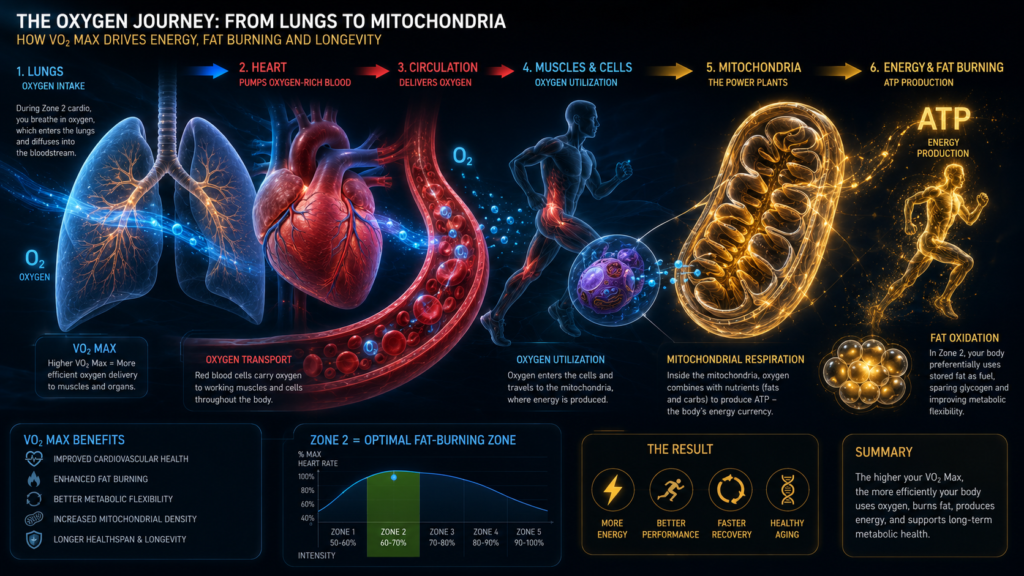
One of the primary benefits of Zone 2 training is its ability to increase the number and efficiency of mitochondria.
Mitochondria are often called the “power plants” of the cell because they convert nutrients into usable energy.
As mitochondrial efficiency improves, the body becomes increasingly capable of:
- utilizing stored fat as fuel;
- preserving glycogen reserves;
- producing energy with less metabolic stress;
- maintaining stable blood glucose levels.
Over time, this creates a metabolic environment that favors sustainable fat loss rather than temporary calorie burning.
This is why many longevity experts consider Zone 2 cardio the foundation of a healthy exercise program.
4.Zone 2 Cardio and Metabolic Flexibility:
Metabolic flexibility refers to your body’s ability to switch efficiently between carbohydrates and fat as energy sources.
Modern lifestyles often impair this capability due to:
- sedentary behavior;
- excessive caloric intake;
- poor sleep;
- chronic stress;
- insulin resistance.
When metabolic flexibility declines, the body becomes increasingly dependent on glucose while losing its ability to access stored fat efficiently.
Regular Zone 2 training helps restore this flexibility by improving mitochondrial adaptation and aerobic metabolism. As a result, the body becomes more efficient at using both fuel sources according to physiological demand.
5.The Connection Between VO2 Max and Longevity:
Researchers increasingly recognize aerobic fitness as one of the most powerful predictors of lifespan.
Several studies have demonstrated that improvements in VO2 max correlate strongly with reduced mortality risk.
In fact, some experts argue that VO2 max may predict longevity more accurately than many traditional health markers.
The reason is simple:
VO2 max reflects the integrated performance of multiple biological systems, including:
- cardiovascular health;
- respiratory efficiency;
- mitochondrial function;
- metabolic health;
- cellular energy production.
When these systems perform efficiently, the body becomes more resilient to aging-related decline. For additional scientific research on VO2 max and longevity, readers can explore the extensive database available through PubMed:
https://pubmed.ncbi.nlm.nih.gov/?term=vo2+max+longevity
6.How Much Zone 2 Cardio Should You Perform?
Most longevity specialists recommend accumulating approximately:
- 150 to 300 minutes per week of Zone 2 activity.
This can be divided into:
- 30 to 60 minutes per session;
- 4 to 5 days per week.
Consistency is more important than intensity. Unlike extreme exercise programs, Zone 2 training is sustainable, recoverable, and compatible with long-term metabolic health.
7.Practical Strategies to Increase VO2 Max After 30:
To maximize aerobic fitness and metabolic longevity:
Walk Daily
Daily walking remains one of the simplest and most effective forms of Zone 2 activity.
Monitor Heart Rate
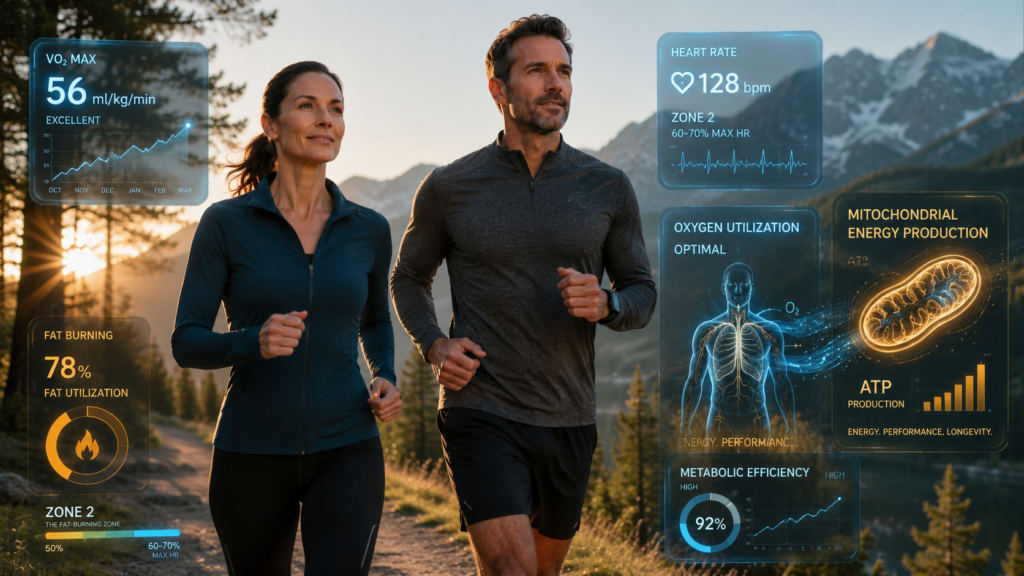
Using a smartwatch or heart rate monitor can help maintain the proper training zone.
Prioritize Sleep
Sleep supports mitochondrial repair, recovery, and cardiovascular adaptation.
Support Mitochondrial Health
Proper nutrition, regular movement, and stress management help maintain healthy cellular energy production.
Stay Consistent Long-term adaptation
8.Internal Connection to Metabolic Longevity:
Zone 2 cardio works synergistically with many of the biological mechanisms discussed in our previous articles.
For example:
- Cellular Aging After 30 explains how mitochondrial decline affects energy production and aging.
- Why Visceral Fat Is Metabolically Dangerous After 30 explores the relationship between abdominal fat and metabolic dysfunction.
- Leptin Resistance and Dopamine Decay examines how the brain influences appetite regulation and energy balance.
Together, these processes form the foundation of long-term metabolic health and sustainable fat loss.
🧬 Support Healthy Cellular Energy
Healthy aging starts at the cellular level. Alongside proper nutrition, exercise, sleep, and stress management, some individuals choose targeted mitochondrial support to help maintain energy production and cellular vitality.
👉 Learn More About Advanced Mitochondrial Formula
Conclusion:
Zone 2 cardio is far more than a simple exercise strategy.
It represents one of the most effective ways to improve mitochondrial efficiency, increase VO2 max, enhance fat oxidation, and support metabolic longevity after 30.
As research continues to reveal the powerful relationship between aerobic fitness and lifespan, Zone 2 training is emerging as one of the most valuable tools for healthy aging.
Improving your VO2 max may not only help you burn more fat today—it may also help you build a healthier, more resilient body for decades to come.
Medical Disclaimer & Affiliate Disclosure: This post contains affiliate links. If you choose to purchase any commercial biomarker testing kits, supplements, or products through these links, we may receive a small commission at no additional cost to you. We only recommend products aligned with our scientific reviews. The information on slimafter30s.com is for educational, scientific, and informational purposes only and does not substitute for professional medical advice, diagnosis, or treatment. Always consult with a qualified healthcare professional before making significant lifestyle changes, interpreting biomarkers, or beginning new nutritional protocols. Reliance on any information provided by Slim After 30s is solely at your own risk.
Pingback: The Metabolic Biomarkers to Every Adult Over 30 (And How to Optimize Them Naturally)
Pingback: The Strength-Longevity Link: Why Grip Strength Predicts Healthy Aging After 30
Pingback: Cellular Energy Decline After 35: Why Your Mitochondria Stop Working Like They Used To