Cellular aging after 30 begins long before most people notice visible signs of aging. While wrinkles, gray hair, and physical changes tend to receive the most attention, the real aging process starts deep inside the body’s cells.
Every day, your cells are exposed to stressors such as inflammation, poor nutrition, sleep deprivation, environmental toxins, and oxidative stress. Over time, these factors gradually reduce cellular efficiency and affect how the body produces energy, regulates metabolism, and maintains overall health.
Understanding cellular aging after 30 may help explain why many adults experience declining energy levels, slower metabolism, increased fat storage, and reduced resilience as they get older.
1.What Is Cellular Aging After 30?
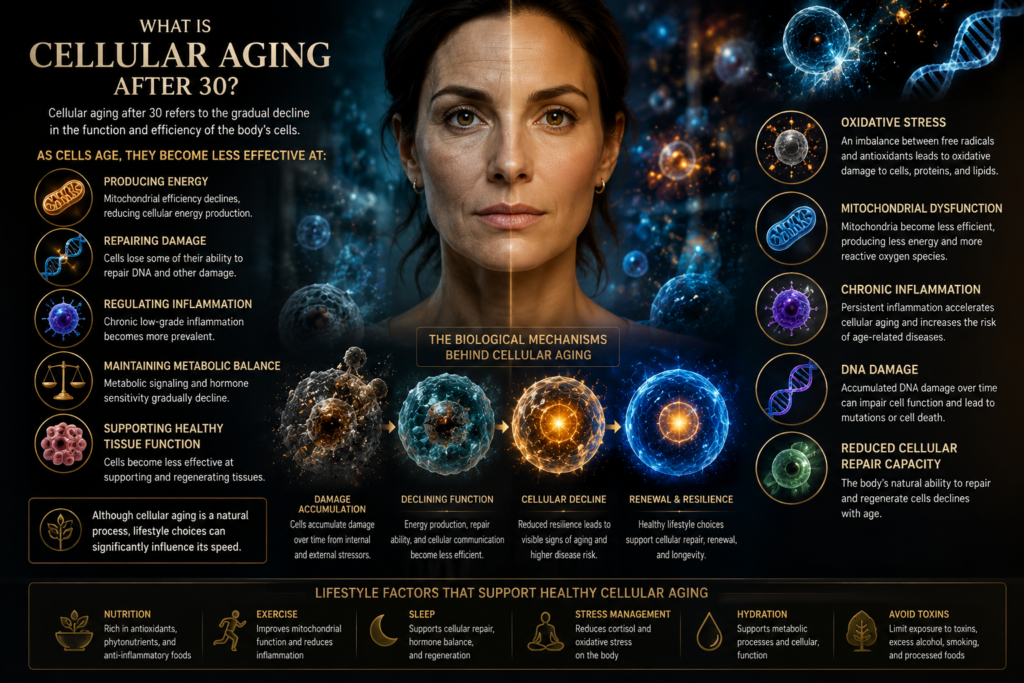
Cellular aging after 30 refers to the gradual decline in the function and efficiency of the body’s cells.
As cells age, they become less effective at:
- producing energy;
- repairing damage;
- regulating inflammation;
- maintaining metabolic balance;
- and supporting healthy tissue function.
This process is influenced by several biological mechanisms, including:
- oxidative stress;
- mitochondrial dysfunction;
- chronic inflammation;
- DNA damage;
- and reduced cellular repair capacity.
Although cellular aging is a natural process, lifestyle choices can significantly influence its speed.
2.Why Cellular Aging After 30 Affects Metabolism:
One of the most important consequences of cellular aging after 30 is its impact on metabolism.
Healthy cells produce energy efficiently through structures called mitochondria.
However, as cellular function declines:
- energy production decreases;
- metabolic efficiency drops;
- fat burning becomes less effective;
- and insulin sensitivity may worsen.
This metabolic slowdown often contributes to:
- fatigue;
- weight gain;
- increased belly fat;
- and reduced physical performance.
According to the National Institute on Aging (NIH), aging affects multiple biological systems that influence health, metabolism, and longevity.
3.How Inflammation Accelerates Cellular Aging After 30:
Chronic inflammation is one of the most powerful accelerators of cellular aging.
When inflammation remains elevated for long periods, cells experience ongoing biological stress.
This may contribute to:
- oxidative damage;
- mitochondrial dysfunction;
- impaired tissue repair;
- and accelerated biological aging.
Inflammation also influences:
- insulin resistance;
- hormonal balance;
- cardiovascular health;
- and immune function.
Modern longevity research increasingly identifies inflammation as a key driver of age-related decline.
4.The Role of Oxidative Stress in Cellular Aging After 30:
Oxidative stress occurs when free radicals overwhelm the body’s antioxidant defenses.
Over time, oxidative stress may damage:
- cell membranes;
- proteins;
- mitochondria;
- and DNA.
This process contributes directly to cellular aging after 30.
Common contributors include:
- poor diet;
- smoking;
- excessive alcohol consumption;
- chronic stress;
- environmental pollutants;
- and inadequate sleep.
Harvard researchers emphasize that lifestyle habits strongly influence healthy aging and long-term wellness. Harvard Health – Healthy Aging Reducing oxidative stress may help support healthier cellular function throughout life.

5.How to Slow Cellular Aging After 30 Naturally:
How to Slow Cellular Aging After 30 Naturally
Although aging cannot be stopped, many evidence-based strategies may support healthier cellular function.
Prioritize Resistance Training
Exercise stimulates:
- mitochondrial health;
- cellular repair;
- circulation;
- and metabolic resilience.
Resistance training is particularly valuable for preserving muscle mass and metabolic health.
Improve Sleep Quality
Deep sleep supports:
- tissue repair;
- hormonal balance;
- immune function;
- and cellular recovery.
Sleep is one of the most powerful anti-aging tools available.
Eat Antioxidant-Rich Foods
Foods rich in antioxidants may help protect cells from oxidative damage.
Examples include:
- berries;
- green tea;
- leafy vegetables;
- olive oil;
- walnuts;
- and colorful fruits.
Manage Chronic Stress
Stress management may reduce:
- cortisol overload;
- inflammation;
- oxidative stress;
- and biological wear and tear.
Meditation, breathwork, walking, and recovery practices may improve long-term cellular health.
Support Cellular Renewal
Emerging research suggests that lifestyle practices such as regular exercise, balanced nutrition, and healthy sleep patterns support natural cellular renewal processes.
Studies available through PubMed – Cellular Aging Research continue to explore how lifestyle influences biological aging and longevity.
🧬 Support Healthy Cellular Energy: Healthy aging starts at the cellular level. Alongside proper nutrition, exercise, sleep, and stress management, some individuals choose targeted mitochondrial support to help maintain energy production and cellular vitality. 👉 Learn More About Advanced Mitochondrial Formula
Conclusion:
Cellular aging after 30 is a natural process, but its speed is heavily influenced by everyday lifestyle choices.
While aging begins at the cellular level, healthy habits can help preserve:
- energy production;
- metabolic efficiency;
- cognitive performance;
- physical vitality;
- and long-term health.
The goal is not simply to add years to life, but to add life to those years.
By supporting cellular health today, you may improve both your current well-being and your future quality of life.
Medical Disclaimer & Affiliate Disclosure: This post contains affiliate links. If you choose to purchase any commercial biomarker testing kits, supplements, or products through these links, we may receive a small commission at no additional cost to you. We only recommend products aligned with our scientific reviews. The information on slimafter30s.com is for educational, scientific, and informational purposes only and does not substitute for professional medical advice, diagnosis, or treatment. Always consult with a qualified healthcare professional before making significant lifestyle changes, interpreting biomarkers, or beginning new nutritional protocols. Reliance on any information provided by Slim After 30s is solely at your own risk.
Pingback: Zone 2 Cardio and Metabolic Longevity: Why VO2 Max Determines Your Fat-Burning Potential After 30
Pingback: Visceral Fat and Metabolic Health: Why Visceral Fat Is Dangerous for Metabolic Health After 30
Pingback: Leptin Resistance and Dopamine After 30: How Dopamine and Brain Signaling Affect Weight Loss
Pingback: The Leucine Trigger: How Meeting the Amino Acid Threshold Optimizes Muscle Protein Synthesis After Age 30
Pingback: Urolithin A and Mitophagy: How This Longevity Compound Rejuvenates Aging Muscle Cells After 30
Pingback: Cellular Energy Decline After 35: Why Your Mitochondria Stop Working Like They Used To