The Metabolic Biomarkers to Every Adult Over 30 can provide valuable insight into how efficiently the body produces energy, regulates blood sugar, manages inflammation, and supports healthy aging.
Many people focus exclusively on body weight when evaluating their health. However, weight alone often fails to reveal what is truly happening beneath the surface.
Modern longevity science suggests that metabolic biomarkers may be among the most powerful indicators of future health outcomes.
By understanding The Metabolic Biomarkers Every Adult Over 30 Should Track, individuals can identify hidden metabolic dysfunction long before symptoms become obvious.

1.Why Metabolic Biomarkers Matter After 30: The Metabolic Biomarkers to Every Adult Over 30:
After age 30, subtle physiological changes begin to influence:
- insulin sensitivity;
- mitochondrial function;
- hormonal regulation;
- body composition;
- cardiovascular health.
These changes often occur gradually and may remain unnoticed for years.
Metabolic biomarkers act as an early warning system, helping identify potential problems before they develop into chronic disease.
1. Fasting Glucose
Fasting glucose measures blood sugar levels after an overnight fast.
Consistently elevated glucose may indicate:
- impaired glucose regulation;
- insulin resistance;
- increased metabolic risk.
How to Optimize
- prioritize resistance training;
- increase daily physical activity;
- improve sleep quality;
- reduce ultra-processed foods;
- maintain a healthy body composition.
2. Fasting Insulin
Many longevity experts consider fasting insulin one of the most important metabolic biomarkers.
Elevated insulin levels often appear years before blood glucose becomes abnormal.
High insulin may contribute to:
- fat storage;
- increased hunger;
- metabolic inflexibility;
- weight-loss resistance.
How to Optimize
- increase dietary protein;
- improve metabolic flexibility;
- perform regular Zone 2 cardio;
- reduce excessive sugar consumption.
Related reading:
Zone 2 Cardio and Metabolic Longevity: Why VO2 Max Determines Your Fat-Burning Potential After 30
3. Hemoglobin A1c (HbA1c)
HbA1c reflects average blood sugar levels over approximately three months.
This biomarker provides a broader picture of metabolic health than a single glucose measurement.
How to Optimize
- maintain stable blood glucose;
- increase physical activity;
- improve sleep duration;
- support healthy body composition.
4. Triglycerides and HDL Cholesterol:
These markers help assess cardiovascular and metabolic health.
High triglycerides combined with low HDL levels may indicate insulin resistance and metabolic dysfunction.
How to Optimize
- increase physical activity;
- reduce refined carbohydrates;
- consume healthy fats;
- prioritize whole foods.
5. High-Sensitivity C-Reactive Protein (hs-CRP)
Inflammation plays a central role in aging and metabolic disease.
hs-CRP measures systemic inflammation and may reveal hidden inflammatory processes.
Elevated levels may be associated with:
- visceral fat accumulation;
- cardiovascular disease;
- metabolic dysfunction.
Related reading:
Why Visceral Fat Is Metabolically Dangerous After 30
How to Optimize
- improve gut health;
- exercise regularly;
- reduce chronic stress;
- prioritize sleep.
6. Waist Circumference
While simple, waist circumference remains one of the strongest indicators of metabolic health.
Excess abdominal fat often reflects deeper metabolic dysfunction.
How to Optimize
- maintain consistent physical activity;
- improve dietary quality;
- reduce chronic inflammation.
7. VO₂ Max
VO₂ Max reflects the body’s ability to utilize oxygen efficiently during exercise.
Many researchers consider it one of the strongest predictors of longevity.
Higher VO₂ Max levels are associated with:
- improved cardiovascular fitness;
- enhanced fat oxidation;
- healthier aging.
How to Optimize
- perform regular Zone 2 cardio;
- remain physically active throughout the week;
- progressively improve aerobic capacity.
8. Body Composition
Body composition provides far more information than body weight alone.
Two individuals may weigh the same while having vastly different levels of:
- muscle mass;
- visceral fat;
- metabolic health.
How to Optimize
- prioritize resistance training;
- consume adequate protein;
- maintain consistent exercise habits.
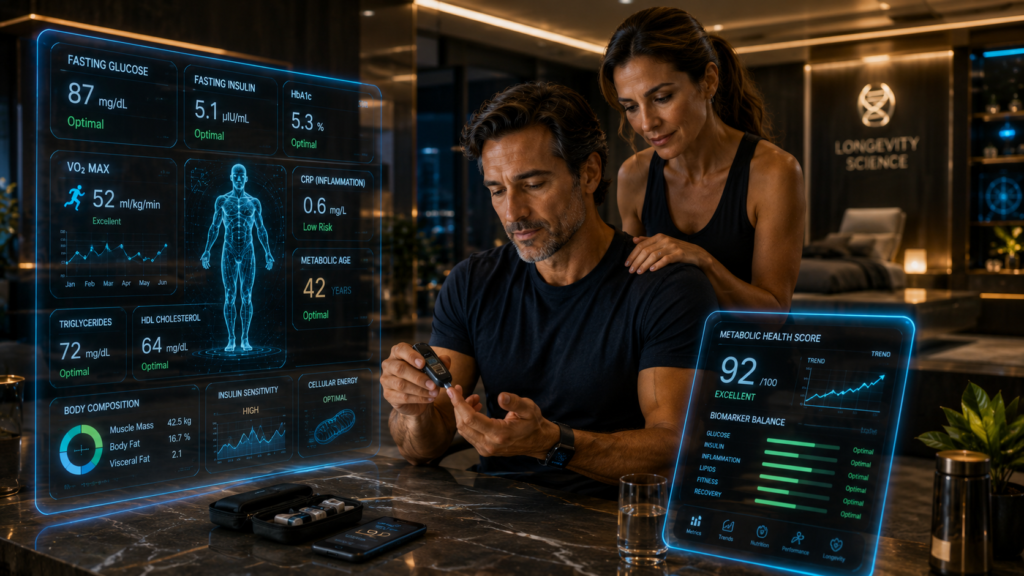
2.The Biomarker Most People Ignore: Gut Health:
Emerging research suggests that the gut microbiome influences nearly every aspect of metabolic health.
The estrobolome, microbiome diversity, and inflammatory regulation all contribute to metabolic resilience.
Related reading:
The Estrobolome Connection: How Gut Dysbiosis Blocks Fat Loss After 30
3.How These Biomarkers Work Together:
The Metabolic Biomarkers to Every Adult Over 30 do not operate independently.
They form an interconnected network involving:
- glucose regulation;
- insulin sensitivity;
- inflammation;
- cardiovascular health;
- mitochondrial function;
- hormonal balance.
Improving one area often creates positive effects across multiple systems.
4.Scientific Evidence: The Metabolic Biomarkers to Every Adult Over 30:
For readers interested in exploring current research on metabolic biomarkers and longevity, visit:
PubMed – Metabolic Biomarkers and Longevity.
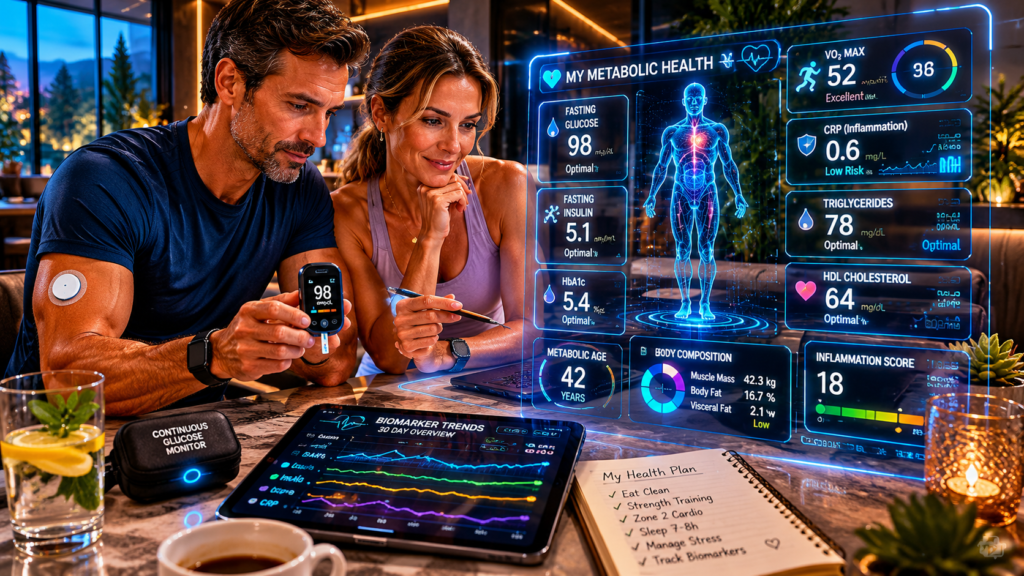
Support Healthy Cellular Energy : Metabolic health depends on more than diet and exercise. Healthy mitochondrial function plays a critical role in energy production, physical performance, and long-term vitality. 👉 Learn More About Advanced Mitochondrial Formula
Conclusion:
The Metabolic Biomarkers to Every Adult Over 30 provide a powerful framework for evaluating long-term metabolic health.
Rather than focusing exclusively on body weight, monitoring key biomarkers allows individuals to identify risks early, optimize metabolic function, and support healthy aging.
Small improvements in glucose regulation, insulin sensitivity, inflammation control, cardiovascular fitness, and body composition can compound over time, creating substantial benefits for both longevity and quality of life.
Medical Disclaimer & Affiliate Disclosure: This post contains affiliate links. If you choose to purchase any commercial biomarker testing kits, supplements, or products through these links, we may receive a small commission at no additional cost to you. We only recommend products aligned with our scientific reviews. The information on slimafter30s.com is for educational, scientific, and informational purposes only and does not substitute for professional medical advice, diagnosis, or treatment. Always consult with a qualified healthcare professional before making significant lifestyle changes, interpreting biomarkers, or beginning new nutritional protocols. Reliance on any information provided by Slim After 30s is solely at your own risk.
Pingback: Circadian Biology and Insulin Sensitivity: Why the Timing of Your Last Meal Changes Cellular Biology