Most people assume aging is simply the passage of time.
Every birthday is viewed as another step toward older age, reduced energy, slower metabolism, and declining physical performance. However, modern longevity science suggests a much more fascinating reality.
Your chronological age is fixed. Your biological age is not.
Biological aging after 30 refers to the gradual decline in cellular function, tissue repair capacity, metabolic flexibility, and resilience against environmental stressors. While this process naturally accelerates after age 30, emerging research shows that many of the mechanisms responsible for biological aging are highly responsive to lifestyle, nutrition, physical activity, sleep quality, and metabolic health.
In other words, while nobody can stop time, it may be possible to influence how rapidly biological aging occurs.
Understanding the cellular mechanisms behind aging is one of the most important scientific developments in modern preventive medicine. Rather than focusing solely on lifespan, researchers now emphasize healthspan — the number of years spent healthy, energetic, and physically independent.
The question is no longer whether we age. The question is how well our cells age.
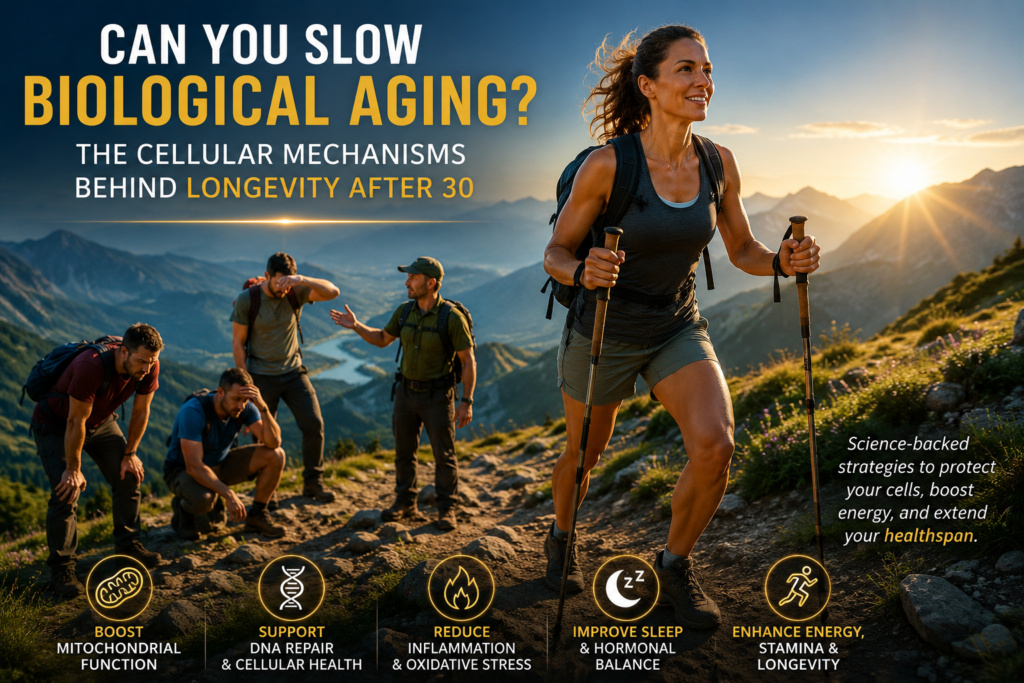
1.What Is Biological Aging?
Biological aging after 30 describes the functional condition of the body’s cells, tissues, and organ systems.
Two individuals may both be 45 years old chronologically, yet one may have the physiological profile of a much younger person while the other exhibits markers associated with accelerated aging.
Scientists evaluate biological aging through multiple factors, including:
- Mitochondrial efficiency
- Inflammatory burden
- Metabolic flexibility
- Insulin sensitivity
- Cellular repair capacity
- DNA integrity
- Oxidative stress levels
These systems interact continuously and determine how effectively the body generates energy, repairs damage
2.Why Biological Aging Accelerates After 30:
Beginning in the third decade of life, subtle cellular changes start accumulating.
Most people do not notice these shifts immediately.
Instead, they appear gradually as:
- Reduced energy levels
- Slower recovery from exercise
- Increased fat accumulation
- Loss of muscle mass
- Declining metabolic efficiency
- Increased susceptibility to inflammation
At the cellular level, several mechanisms contribute to this process.
Mitochondrial Dysfunction
Mitochondria are responsible for producing ATP, the primary energy currency of the body.
Chronic Low-Grade Inflammation
Researchers often refer to age-related inflammation as “inflammaging.”
Unlike acute inflammation that helps the body heal after injury, chronic inflammation persists for years and contributes to:
- Insulin resistance
- Cardiovascular disease
- Neurodegeneration
- Accelerated cellular aging
Inflammatory signaling can directly impair cellular repair systems and mitochondrial function.
Impaired Cellular Repair
Every day, cells experience damage from:
- Environmental toxins
- Ultraviolet radiation
- Poor dietary choices
- Psychological stress
- Metabolic byproducts
Young cells repair this damage efficiently.
With age, repair systems become less effective, allowing dysfunction to accumulate over time.
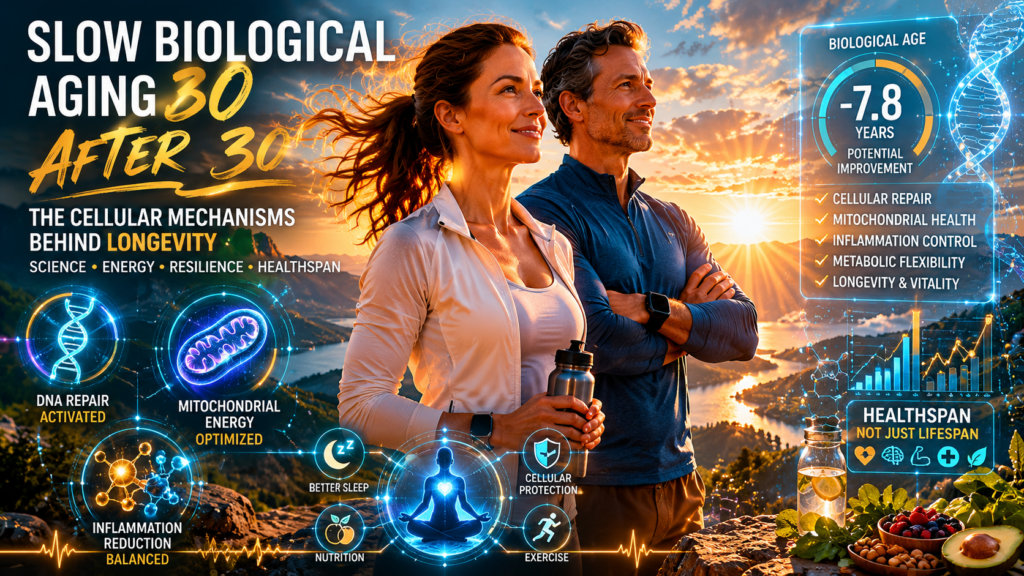
3.The Hallmarks of Aging:
Longevity researchers have identified several biological hallmarks that drive aging.
These include:
Genomic Instability
DNA damage accumulates throughout life.
Although repair mechanisms continuously correct many errors, efficiency gradually declines with age.
Telomere Shortening
Telomeres protect the ends of chromosomes.
As cells divide repeatedly, telomeres become shorter, eventually limiting cellular replication capacity.
Reduced ATP production and increased oxidative stress contribute significantly to biological aging.
Cellular Senescence
Senescent cells remain alive but stop functioning optimally.
These cells release inflammatory molecules that negatively affect surrounding tissues.
Altered Nutrient Sensing
Pathways involving insulin, mTOR, AMPK, and other metabolic regulators influence aging and longevity.
When these pathways become chronically overstimulated, biological aging after 30 may accelerate.
4.Can Lifestyle Influence Biological Aging After 30?
One of the most exciting findings in longevity science is that biological aging after 30 appears highly responsive to lifestyle choices.
Several interventions consistently demonstrate beneficial effects.
Exercise
Physical activity remains one of the most powerful longevity tools available.
Regular exercise supports:
- Mitochondrial biogenesis
- Insulin sensitivity
- Cardiovascular health
- Muscle preservation
- Metabolic flexibility
Zone 2 cardiovascular training is particularly effective for improving mitochondrial efficiency.
Sleep Quality
Sleep is when many cellular repair processes occur.
Poor sleep can increase:
- Cortisol levels
- Inflammation
- Insulin resistance
- Oxidative stress
Optimizing sleep quality may help preserve metabolic and cellular function over time.
Nutrition
Nutrient-dense dietary patterns support:
- Mitochondrial health
- DNA repair
- Antioxidant defenses
- Metabolic regulation
Whole foods rich in fiber, protein, healthy fats, vitamins, minerals, and polyphenols provide essential substrates for cellular maintenance.
Stress Management
Chronic psychological stress increases cortisol exposure and inflammatory signaling.
Over time, excessive stress can contribute to accelerated biological aging.
Practices such as mindfulness, breathing exercises, nature exposure, and physical activity may help improve physiological resilience.
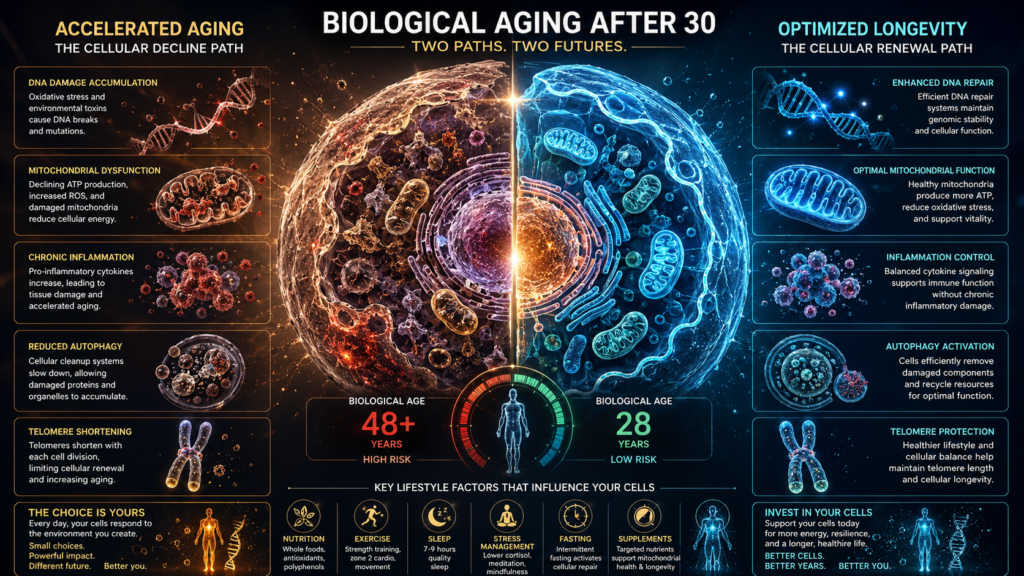
5.The Future of Longevity Science:
Modern longevity research increasingly focuses on extending healthspan rather than merely lifespan.
Scientists are exploring interventions that target:
- Cellular senescence
- Mitochondrial dysfunction
- Inflammation
- Metabolic health
- Cellular repair pathways
While no intervention can completely stop aging, evidence suggests that supporting cellular health may significantly influence how the aging process unfolds.
The future of healthy aging is likely to depend less on treating disease and more on preserving cellular function throughout life.
🧬 Support Healthy Cellular Energy
Healthy aging starts at the cellular level. Alongside proper nutrition, exercise, sleep, and stress management, some individuals choose targeted mitochondrial support to help maintain energy production and cellular vitality.
👉 Learn More About Advanced Mitochondrial Formula
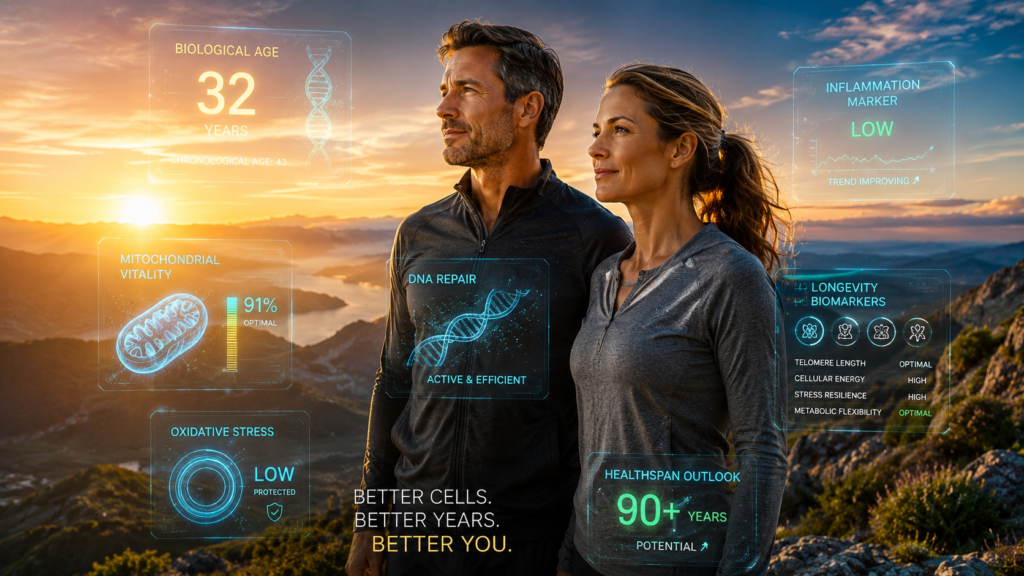
Conclusion:
Biological aging after 30 is not determined solely by the number of years you have lived.
It reflects the condition of your cells, the efficiency of your metabolism, the health of your mitochondria, and the body’s ability to repair damage over time.
After age 30, biological aging naturally accelerates. However, the emerging science of longevity suggests that many underlying mechanisms remain remarkably adaptable.
Exercise, sleep, nutrition, stress management, and metabolic health all influence the cellular systems that determine how we age.
While aging itself is inevitable, maintaining healthier, more resilient cells may allow individuals to preserve energy, vitality, and functional capacity for decades longer than previously believed.
The goal is not simply to live longer.
The goal is to remain healthier while living longer.
Medical Disclaimer & Affiliate Disclosure: This post contains affiliate links. If you choose to purchase any commercial biomarker testing kits, supplements, or products through these links, we may receive a small commission at no additional cost to you. We only recommend products aligned with our scientific reviews. The information on slimafter30s.com is for educational, scientific, and informational purposes only and does not substitute for professional medical advice, diagnosis, or treatment. Always consult with a qualified healthcare professional before making significant lifestyle changes, interpreting biomarkers, or beginning new nutritional protocols. Reliance on any information provided by Slim After 30s is solely at your own risk.