For many adults over 30, metabolism gradually begins slowing in ways that feel confusing and deeply frustrating.
How to know if inflammation slows metabolism after 30? Energy decreases. Fat loss becomes resistant. Recovery worsens. Abdominal fat accumulates more easily. And despite improved nutrition and exercise efforts, the body increasingly feels metabolically “stuck.”
Most people assume this process is simply part of aging.
However, modern metabolic science reveals that one of the most powerful hidden drivers of metabolic slowdown after 30 is:
chronic low-grade inflammation.
Unlike acute inflammation—which temporarily helps the body heal—chronic metabolic inflammation silently disrupts insulin signaling, mitochondrial efficiency, thyroid conversion, appetite regulation, and fat oxidation at the cellular level.
This inflammatory state often develops gradually through:
- poor sleep;
- processed food exposure;
- chronic stress;
- gut dysbiosis;
- sedentary behavior;
- and visceral fat accumulation itself.
The result is a body trapped in biochemical survival mode where metabolism progressively prioritizes energy conservation and fat storage over fat burning.
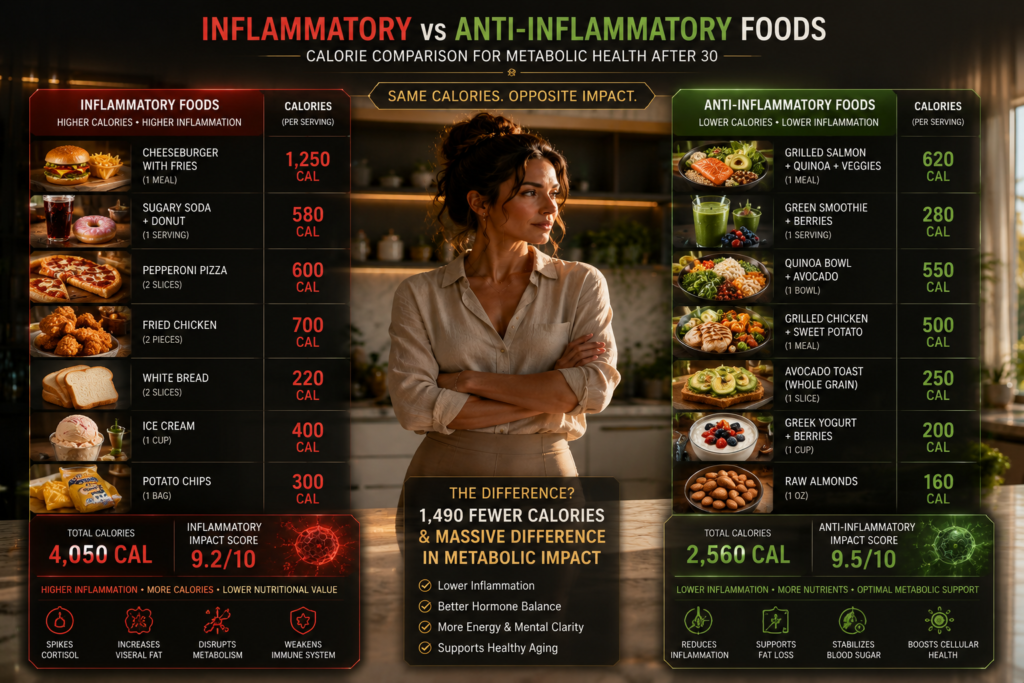
1. The Hidden Inflammatory Signals That Damage Metabolism:
Inflammation is controlled by a complex network of immune signaling molecules known as cytokines.
Under healthy conditions, cytokines coordinate tissue repair and immune defense. However, chronic metabolic stress causes prolonged elevation of inflammatory cytokines including:
- TNF-alpha;
- IL-6;
- and C-reactive protein (CRP).
These inflammatory mediators interfere directly with insulin receptor signaling pathways.
As inflammation increases, cells become progressively less responsive to insulin, forcing the pancreas to secrete larger amounts of insulin to maintain blood sugar control.
Chronically elevated insulin then suppresses lipolysis, making fat burning increasingly difficult.
Inflammatory cytokines also impair mitochondrial respiration and reduce cellular energy production efficiency, contributing to:
- fatigue;
- brain fog;
- low exercise tolerance;
- and metabolic slowdown.
The body essentially becomes biochemically resistant to efficient energy utilization.
2. Visceral Fat: The Hormonal Organ Most People Ignore:
Many people still view body fat as passive energy storage tissue.
Modern endocrinology now understands something far more important:
visceral fat behaves like an active inflammatory organ.
Unlike subcutaneous fat located beneath the skin, visceral fat surrounding internal organs produces large quantities of inflammatory cytokines and stress hormones.
This inflammatory activity creates a dangerous metabolic feedback loop:
- inflammation worsens insulin resistance;
- insulin resistance increases fat storage;
- additional visceral fat generates more inflammation.
Over time, this cycle progressively impairs:
- glucose metabolism;
- thyroid signaling;
- mitochondrial efficiency;
- testosterone and estrogen balance;
- and appetite regulation.
Visceral fat is not simply cosmetic weight gain.
It is metabolically active inflammatory tissue capable of disrupting the entire endocrine system.
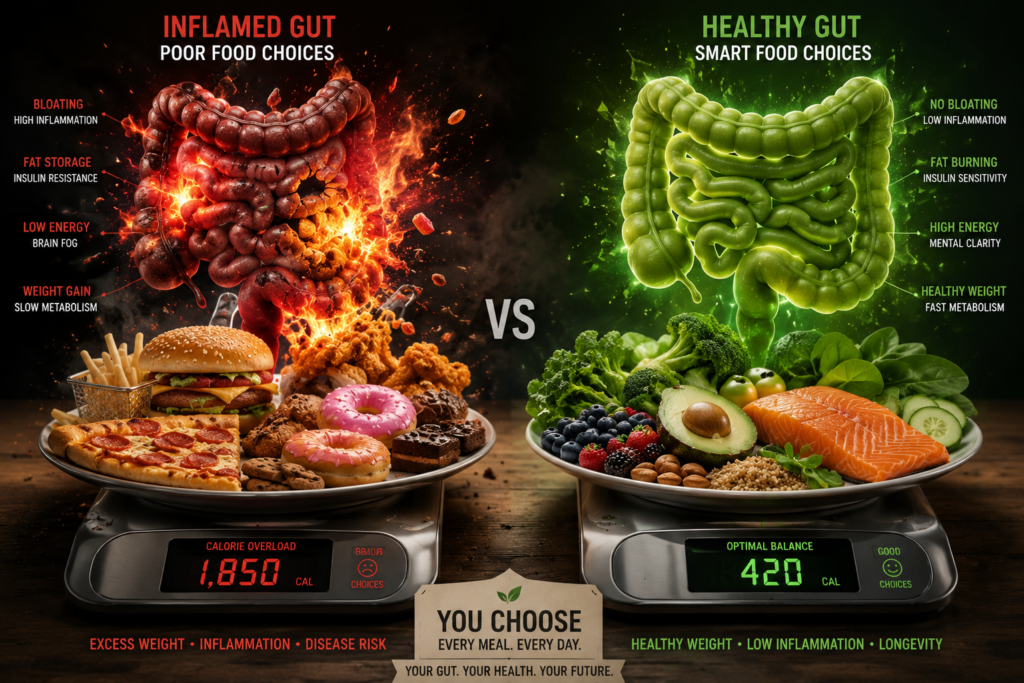
3. The Gut-Inflammation Connection and Metabolic Dysfunction:
One of the most overlooked drivers of systemic inflammation after 30 is gut barrier dysfunction.
The intestinal microbiome plays a critical role in:
- immune regulation;
- glucose metabolism;
- neurotransmitter production;
- and inflammatory balance.
However, diets high in ultra-processed foods, sugar, alcohol, and chronic stress exposure gradually damage intestinal barrier integrity.
This process—often described as increased intestinal permeability or “leaky gut”—allows inflammatory bacterial compounds such as lipopolysaccharides (LPS) to enter the bloodstream.
Once circulating systemically, these compounds trigger widespread immune activation and inflammatory cytokine release.
This phenomenon, known as metabolic endotoxemia, has been increasingly associated with:
- obesity;
- insulin resistance;
- fatty liver disease;
- and metabolic syndrome.
Inflammation originating in the gut frequently becomes a full-body metabolic problem.
4. Anti-Inflammatory Biohacking for Metabolic Recovery:
Restoring metabolic efficiency after 30 requires reducing chronic inflammatory burden at the cellular level.
Modern longevity science strongly supports several evidence-based anti-inflammatory interventions:
Resistance Training
Regular muscular activity reduces inflammatory cytokines while improving insulin sensitivity and mitochondrial function.
Sleep Optimization
Deep sleep suppresses inflammatory signaling while supporting hormonal recovery and nervous system regulation.
Omega-3 Fatty Acids
EPA and DHA help reduce inflammatory cytokine production and improve metabolic flexibility.
Polyphenol-Rich Foods
Blueberries, green tea, olive oil, turmeric, cacao, and cruciferous vegetables provide antioxidant compounds that help regulate oxidative stress and inflammation.
Gut Microbiome Support
Increasing fiber diversity and fermented foods helps strengthen intestinal barrier function and improve inflammatory balance.
Stress Reduction
Chronic cortisol elevation directly amplifies inflammatory signaling pathways and metabolic dysfunction.
As inflammation decreases:
- insulin signaling improves;
- mitochondrial efficiency recovers;
- fat oxidation increases;
- and energy production becomes more stable.
The body gradually exits survival physiology and regains metabolic flexibility
Conclusion:
After the age of 30, chronic inflammation becomes one of the most powerful hidden drivers of metabolic slowdown and fat gain.
Inflammatory cytokines impair:
- insulin sensitivity;
- mitochondrial function;
- hormonal signaling;
- gut integrity;
- and fat-burning efficiency itself.
The body gradually shifts into a defensive biochemical state optimized for energy conservation rather than metabolic performance.
True fat loss recovery requires more than calorie reduction alone.
It requires lowering the inflammatory burden disrupting cellular metabolism from within.
When inflammation decreases, metabolism often begins recovering naturally.
Healing metabolism begins by calming the biological fire underneath it.
Medical Disclaimer: The information on this website is for educational and informational purposes only and is not intended as medical advice. The content regarding inflammation, cytokines, visceral fat, insulin resistance, gut barrier function, and metabolic health is based on current scientific research but should not be used to diagnose, treat, or prevent any health condition. Always consult with a qualified healthcare professional or physician before implementing dietary, supplementation, exercise, or metabolic protocols. Reliance on any information provided by slimafter30s.com is solely at your own risk.
Pingback: Inflammation and Weight Gain After 30: The Hidden Link Slowing Your Metabolism
Pingback: Metabolic Age After 30: Why Your Body May Be Older Than You Think