Why Weight Gain Is Not Just About Willpower:
Many people believe that weight gain is simply the result of eating too much and exercising too little. While energy balance certainly matters, modern metabolic science suggests that the brain plays a far greater role in body weight regulation than previously understood.
Leptin Resistance and Dopamine: After age 30, subtle changes in hormonal signaling, inflammation, stress exposure, and cellular metabolism may alter the way the brain regulates hunger, motivation, and fat storage.
Two of the most important players in this process are leptin and dopamine.
Understanding how leptin resistance and dopamine signaling interact may help explain why some individuals struggle with persistent hunger, cravings, reduced motivation, and increasing body fat despite their best efforts.

1.What Is Leptin?
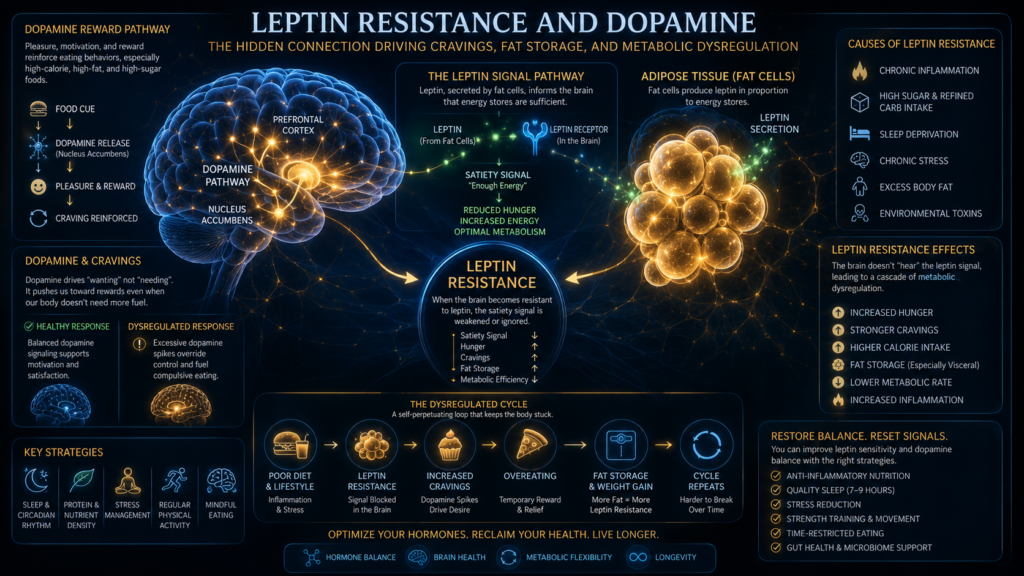
Leptin is a hormone primarily produced by fat cells.
Its primary function is to communicate the body’s energy status to the brain, particularly to regions involved in appetite regulation.
Under normal conditions, higher fat stores lead to higher leptin levels. The brain interprets this signal as an indication that sufficient energy is available, helping reduce hunger and regulate food intake.
In theory, this system should help maintain a stable body weight.
However, reality is often more complicated.
2.What Is Leptin Resistance?
Leptin resistance occurs when the brain becomes less responsive to leptin signals.
Although the body may produce adequate amounts of leptin, the brain behaves as if energy stores are insufficient.
As a result, individuals may experience:
- Increased hunger
- Reduced satiety
- Stronger food cravings
- Lower energy expenditure
- Greater difficulty losing weight
This creates a biological environment that encourages continued food intake and fat accumulation.
3.The Role of Dopamine in Appetite and Motivation:
While leptin helps regulate energy balance, dopamine plays a central role in reward, motivation, and behavioral reinforcement.
Dopamine is often referred to as the brain’s reward neurotransmitter, but its function extends far beyond pleasure.
It influences:
- Motivation
- Goal-directed behavior
- Learning
- Food-seeking behavior
- Reward anticipation
Highly processed foods rich in sugar, refined carbohydrates, and fats can strongly stimulate dopamine pathways, reinforcing eating behaviors over time.
4.When Leptin Resistance and Dopamine Signaling Collide:
One of the most fascinating discoveries in metabolic neuroscience is that leptin and dopamine systems are deeply interconnected.
When leptin signaling functions properly, the brain can better regulate reward responses to food.
However, in states of leptin resistance, reward circuits may become dysregulated.
Individuals may find themselves:
- Thinking about food more frequently
- Experiencing stronger cravings
- Feeling less satisfied after meals
- Seeking greater stimulation from highly palatable foods
In other words, the brain may continue driving food-seeking behavior even when sufficient energy has already been consumed.
5.Why Leptin Resistance and Dopamine Dysfunction Increase After 30:
Several age-related factors contribute to this process.
Chronic Low-Grade Inflammation
Persistent inflammation can interfere with leptin signaling pathways within the brain.
As inflammatory activity increases, leptin sensitivity may decline.
Chronic Stress and Cortisol
Elevated cortisol levels may influence both appetite regulation and reward circuitry.
As discussed in our article on The Cortisol Trap – Weight Loss, chronic stress can alter hormonal balance and contribute to metabolic dysfunction.
Visceral Fat Accumulation
Excess visceral fat produces inflammatory compounds that further impair metabolic communication between the brain and body.
This helps explain why abdominal obesity is strongly associated with leptin resistance.
Cellular Aging
Age-related declines in mitochondrial function and cellular repair may also affect brain health and metabolic regulation.
For a deeper exploration of this process, see our article Cellular Aging After 30: The Invisible Process Affecting Your Weight and Energy.
6.Can Leptin Sensitivity Be Improved?
Emerging evidence suggests that lifestyle interventions may help support healthier leptin signaling.
Strategies include:
Prioritizing Sleep
Sleep deprivation is strongly associated with hormonal dysregulation and increased appetite.
Reducing Ultra-Processed Foods
Whole-food nutrition patterns may help reduce excessive reward stimulation and support metabolic health.
Managing Stress
Stress management techniques may help regulate cortisol levels and improve overall metabolic resilience.
Supporting Gut Health
Gut-derived hormones such as GLP-1 play important roles in appetite regulation and satiety.
For more information, see our article Endogenous GLP-1 and Natural Fiber for Weight Loss.
🧬 Support Healthy Cellular Energy
Healthy aging starts at the cellular level. Alongside proper nutrition, exercise, sleep, and stress management, some individuals choose targeted mitochondrial support to help maintain energy production and cellular vitality.
👉 Learn More About Advanced Mitochondrial Formula
Conclusion:
Leptin resistance and dopamine dysfunction reveal an important truth about weight management: the brain is a central player in metabolic health.
For many individuals, persistent hunger, cravings, and difficulty losing weight are not simply matters of discipline or willpower.
They may reflect complex biological signals involving hormonal communication, reward pathways, inflammation, and cellular health.
Understanding these mechanisms provides a more accurate and compassionate view of weight gain after 30 while highlighting practical strategies that support healthier metabolism, improved satiety, and long-term well-being.
Medical Disclaimer & Affiliate Disclosure: This post contains affiliate links. If you choose to purchase any commercial biomarker testing kits, supplements, or products through these links, we may receive a small commission at no additional cost to you. We only recommend products aligned with our scientific reviews. The information on slimafter30s.com is for educational, scientific, and informational purposes only and does not substitute for professional medical advice, diagnosis, or treatment. Always consult with a qualified healthcare professional before making significant lifestyle changes, interpreting biomarkers, or beginning new nutritional protocols. Reliance on any information provided by Slim After 30s is solely at your own risk.
Pingback: The Estrobolome Connection: How Gut Dysbiosis Blocks Fat Loss After 30