Visceral Fat and Metabolic Health: Why Visceral Fat Is Dangerous for Metabolic Health After 30.
Talking about Visceral Fat and Metabolic Health is quite challenging, because many people assume that body fat is simply stored energy. However, modern metabolic science reveals a much more complex reality. Not all body fat behaves the same way, and one specific type—visceral fat—may be among the most metabolically harmful tissues in the human body.
Unlike subcutaneous fat, which lies directly beneath the skin, visceral fat accumulates deep inside the abdominal cavity, surrounding vital organs such as the liver, pancreas, and intestines. Although often invisible from the outside, this internal fat depot actively influences hormones, inflammation, insulin sensitivity, and long-term metabolic health. For adults over 30, understanding visceral fat may be one of the most important steps toward sustainable weight management and healthy aging.
1.What Is Visceral Fat?
Visceral fat is a type of adipose tissue located deep within the abdomen. Unlike the fat you can pinch beneath the skin, visceral fat is biologically active and functions almost like an endocrine organ.
Researchers now recognize that visceral fat releases signaling molecules known as adipokines, along with inflammatory compounds that influence metabolic function throughout the body.
As visceral fat accumulates, the body may experience:
- Increased inflammation
- Reduced insulin sensitivity
- Greater cardiovascular risk
- Hormonal disruption
- Impaired metabolic flexibility
This explains why two individuals with similar body weights can have dramatically different health outcomes depending on where fat is stored.
2.The Metabolic Connection:
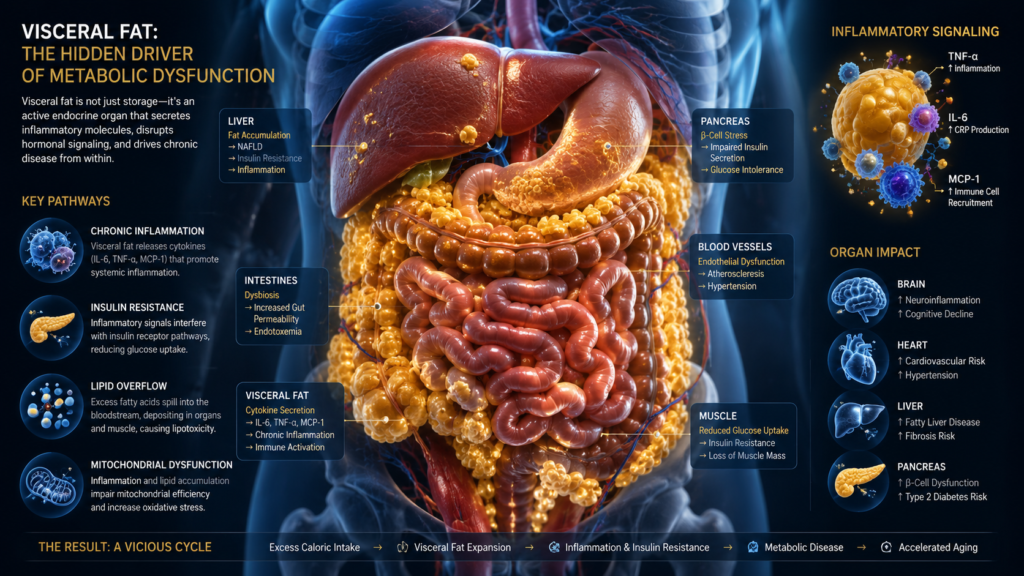
One of the most concerning characteristics of visceral fat is its relationship with chronic low-grade inflammation. What we refer to here as: Visceral Fat and Metabolic Health.
Visceral fat cells release inflammatory cytokines that may interfere with normal cellular communication. Over time, this inflammatory environment can impair insulin signaling and contribute to metabolic dysfunction.
This process helps explain why abdominal obesity is strongly associated with:
- Type 2 diabetes
- Metabolic syndrome
- Non-alcoholic fatty liver disease
- Cardiovascular disease
The danger is not simply carrying excess weight. The danger lies in where that weight is stored.
3.Visceral Fat and Insulin Resistance:
Insulin is responsible for helping glucose enter cells where it can be used for energy. However, excessive visceral fat may reduce cellular responsiveness to insulin, a condition known as insulin resistance.
As insulin resistance develops, the body often compensates by producing even more insulin.
This cycle may promote:
- Increased hunger
- Greater fat storage
- Energy crashes
- Elevated blood sugar levels
Over time, this creates a metabolic environment that makes weight loss increasingly difficult.
4.Why Visceral Fat Often Increases After 30:
Many adults notice that maintaining a healthy body composition becomes more challenging with age.
Several factors contribute to this shift:
Hormonal Changes
Age-related changes in estrogen, testosterone, growth hormone, and other metabolic regulators may encourage greater abdominal fat accumulation, Making the true connection = Visceral Fat and Metabolic Health
Chronic Stress
Elevated cortisol levels are strongly associated with increased visceral fat storage.
As discussed in our article on The Cortisol Trap – Weight Loss, prolonged stress can alter appetite regulation and promote fat deposition around internal organs.
Reduced Physical Activity
Modern lifestyles often involve prolonged sitting, lower energy expenditure, and reduced muscle stimulation. Since muscle tissue plays a major role in metabolic health, decreased activity can accelerate visceral fat accumulation.

5.The Role of Cellular Aging:
Recent research suggests that visceral fat and cellular aging may reinforce one another.
As cellular repair mechanisms become less efficient, inflammatory activity may increase. At the same time, excess visceral fat contributes additional oxidative stress and inflammatory signaling.
This relationship helps explain why abdominal obesity is frequently associated with reduced energy levels and accelerated biological aging.
For a deeper understanding of this process, see our article on Cellular Aging After 30: The Invisible Process Affecting Your Weight and Energy.
6.Can Visceral Fat Be Reduced?
The encouraging news is that visceral fat tends to respond relatively well to lifestyle interventions.
Strategies supported by metabolic research include:
Prioritizing Dietary Fiber
Dietary fiber may improve satiety, support gut health, and help regulate glucose metabolism.
Emerging evidence also suggests that certain fermentable fibers can influence gut-derived hormones involved in appetite regulation.
For more information, see our article on Endogenous GLP-1 and Natural Fiber for Weight Loss.
Strength Training
Resistance exercise helps preserve lean muscle mass while improving insulin sensitivity.
Consistent Sleep
Poor sleep is associated with elevated cortisol levels and increased abdominal fat accumulation.
Stress Management
Reducing chronic stress may improve hormonal balance and support healthier fat distribution.
🧬 Support Healthy Cellular Energy: Healthy aging starts at the cellular level. Alongside proper nutrition, exercise, sleep, and stress management, some individuals choose targeted mitochondrial support to help maintain energy production and cellular vitality. 👉 Learn More About Advanced Mitochondrial Formula
Conclusion:
As seen the topic is Visceral Fat and Metabolic Health is far more than a cosmetic concern. The Visceral Fat It is a metabolically active tissue capable of influencing inflammation, insulin sensitivity, hormonal signaling, and long-term health outcomes.
Although visceral fat often increases with age, it is not an inevitable consequence of getting older.
By focusing on metabolic health, nutrient quality, physical activity, sleep, and stress management, individuals can support healthier body composition and reduce one of the most significant hidden risks associated with weight gain after 30. Understanding visceral fat is not simply about losing weight—it is about protecting metabolic health, preserving energy, and promoting longevity.
Medical Disclaimer: The information on this website is for educational and informational purposes only and is not intended as medical advice. The content regarding muscle protein synthesis, anabolic resistance, leucine thresholds, circadian nutrition, metabolic synchronization, and protein timing is based on current scientific research but should not be used to diagnose, treat, or prevent any health condition. Always consult with a qualified healthcare professional or physician before making significant dietary changes or beginning new nutritional protocols. Reliance on any information provided by Slim After 30s is solely at your own risk.
Pingback: Zone 2 Cardio and Metabolic Longevity: Why VO2 Max Determines Your Fat-Burning Potential After 30
Pingback: The Estrobolome Connection: How Gut Dysbiosis Blocks Fat Loss After 30
Pingback: The Cortisol Trap - Weight Loss: Why High Stress Makes Metabolic Optimization Impossible - slimafter30s.com
Pingback: The Metabolic Biomarkers to Every Adult Over 30 (And How to Optimize Them Naturally)